









LOADING

SCROLL

News

2026.02.12

The Ishibashi Shojiro Memorial Museum Reopens After Renovation on Saturday, February 14, 2026!

The Ishibashi Shojiro Memorial Museum, which opened in 2016 alongside the Kurume City Art Museum, has undertaken facility renovations and exhibit updates to celebrate its 10th anniversary, thanks to a generous donation from the Ishibashi Foundation. Using models, large monitors, and touchscreens, the museum presents Shojiro’s life and character in a more approachable way for a broader audience.

Exterior of the Memorial Museum

About the Museum

In November 2016, the prestigious Ishibashi Foundation renovated the Ishibashi Museum of Art Annex and donated it to Kurume City in honor of the Ishibashi Cultural Center's 60th anniversary. Throughout his life, Ishibashi Shojiro devoted himself to developing his hometown of Kurume in Fukuoka Prefecture. This memorial museum has various exhibits on display that connect us to the history of this building as a hub of art and culture, as well as the life and personal philosophy of Ishibashi Shojiro.

Exhibition Room

Area 01
Area 02
Area 03
Area 04
Area 05

A Journey Through Shojiro’s
Collection and Museums

Large displays showcase the art collection of Ishibashi Shojiro, which includes works by Aoki Shigeru, Fujishima Takeji, and Paul Cézanne, and take us along on his travels to art museums around the world using his personal records.

Growing Business:
The Past and Present of the Ishibashi Cultural Center

This exhibit follows the growth of Shojiro's business from tabi socks to tires, bicycles, and automobiles. It also tells the story of the Ishibashi Cultural Center, which Shojiro loved like his own child. Follow its growth from its grand opening to its current form, using models and advertising materials from over the course of its history.

See, Feel, and Discover
the Vision of Shojiro

Various keywords are scattered across a 55-inch touchscreen display, and by tapping on them, visitors can retrace the life of Ishibashi Shojiro and learn about his unique vision.

Discover Ishibashi Shojiro’s Achievements Through Photos and Archives

Through priceless photographs and other items from Ishibashi Shojiro's life and times since his birth in Kurume, this exhibition highlights his many achievements, as he made incredible contributions in the fields of business, education, arts, and culture. By connecting to the museum's Wi-Fi, you can enjoy an audio guide in Japanese, English, Simplified Chinese, Traditional Chinese, and Korean.

* When using the audio guide in exhibition spaces, please keep the volume low or wear earphones if possible.

Records of Ishibashi Shojiro and
the Ishibashi Cultural Center

Various records related to Ishibashi Shojiro and the work of the Ishibashi Cultural Center are made available to the public in videos and other media.

Area 01

A Journey Through Shojiro’s
Collection and Museums

Large displays showcase the art collection of Ishibashi Shojiro, which includes works by Aoki Shigeru, Fujishima Takeji, and Paul Cézanne, and take us along on his travels to art museums around the world using his personal records.

Shojiro and the World of Art

Area 02

Growing Business:
The Past and Present of the Ishibashi Cultural Center

This exhibit follows the growth of Shojiro's business from tabi socks to tires, bicycles, and automobiles. It also tells the story of the Ishibashi Cultural Center, which Shojiro loved like his own child. Follow its growth from its grand opening to its current form, using models and advertising materials from over the course of its history.

The Endeavors of Ishibashi Shojiro

Ishibashi Cultural Center: Growing with the Times

Area 03

See, Feel, and Discover
the Vision of Shojiro

Various keywords are scattered across a 55-inch touchscreen display, and by tapping on them, visitors can retrace the life of Ishibashi Shojiro and learn about his unique vision.

Shojiro: trace by keywords

Area 04

Discover Ishibashi Shojiro’s Achievements Through Photos and Archives

Through priceless photographs and other items from Ishibashi Shojiro's life and times since his birth in Kurume, this exhibition highlights his many achievements, as he made incredible contributions in the fields of business, education, arts, and culture.

By connecting to the museum's Wi-Fi, you can enjoy an audio guide in Japanese, English, Simplified Chinese, Traditional Chinese, and Korean.

* When using the audio guide in exhibition spaces, please keep the volume low or wear earphones if possible.

Wall exhibition corner

History of Ishibashi Shojiro

Area 05

Records of Ishibashi Shojiro and the Ishibashi Cultural Center

Various records related to Ishibashi Shojiro and the work of the Ishibashi Cultural Center are made available to the public in videos and other media.

Information Library

Video-viewing corner

Ishibashi Shojiro
(1889–1976)

Ishibashi Shojiro was born in 1889 in the city of Kurume, Fukuoka Prefecture. When he was 17 years old, he took over the family tailoring business, and through the invention of rubber-soled jika-tabi socks and other rubber footwear, he grew the business into a nationwide success. In 1931, he founded Bridgestone Tire Co., Ltd. (now Bridgestone Corporation) and succeeded in the domestic production of automobile tires, which allowed it to become one of Japan's leading companies.

At the same time, Shojiro was also dedicated to social work and the promotion of culture. The numerous facilities and art collections he left behind are treasured to this very day, both in his hometown of Kurume and around the world.

Main Achievements
  • Helping to establish the Kyushu Medical School (currently Kurume University) (1928)
  • Founding the Bridgestone Museum of Art (currently the Artizon Museum)(1952)
  • Constructing and donating to the Ishibashi Cultural Center (1956)
  • Constructing and donating to the Japanese pavilion at the Venice Biennale (1956)
  • Donating a new building to the National Museum of Modern Art, Tokyo (1969)
ISHIBASHI Shojiro

ISHIBASHI Shojiro :
A Global Vision Born
in Kurume

Enterprise

“Expanding the Enterprise for the Greater Good.”

Ishibashi Shojiro took over his family’s tailoring business at age 17, focusing on tabi socks to boost sales and later expanding into rubber shoes. In 1930, he succeeded in producing the first domestically made tires

Education

“Helping Shape a Society Rich with Meaning and Wellbeing.”

Shojiro engaged in philanthropy throughout his life, endowing schools and museums - gifts that endure as cherished legacies in Kurume and across the world.

Art and Culture

“Sharing Art with All and Nurturing Its Growth.”

Ishibashi Shojiro’s passion for art collecting was sparked by his encounter with Sakamoto Hanjiro, an artist from Kurume. Today, the Ishibashi Foundation Collection carries on his vision by offering the joy of art to broader communities.

A Video Introduction to Ishibashi Shojiro

This video presents the life of Ishibashi Shojiro, the founder and donor of the Ishibashi Cultural Center. It uses many illustrations, photos, and pieces of footage to make it fun and easy to understand. We hope this can be used as a way for elementary and junior high students to prepare for a visit to the Ishibashi Cultural Center and Art Museum.

Watch the Video

Visitor Information

Address
1015, Nonaka-machi, Kurume-shi, Fukuoka 839-0862, Japan
TEL 0942-39-1131 FAX 0942-39-3134
Hours

10:00〜17:00 * Admission ends 30 minutes before closing.

Closed

Mondays

(Except for national holidays on Monday, in which case the museum is open on the holiday)
Plan Your Visit
Admission Fee
General / Seniors (65 and over) /
College and University Students
¥300
High school students and under Free

* Free for visitors with tickets to the Kurume City Art Museum (The main building).

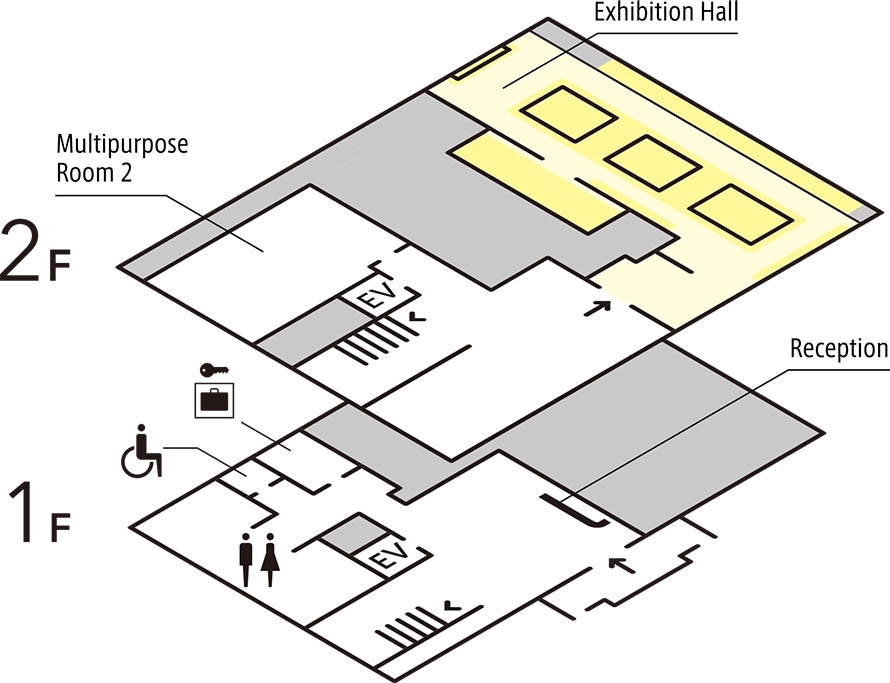
Floor Guide
Floor Map
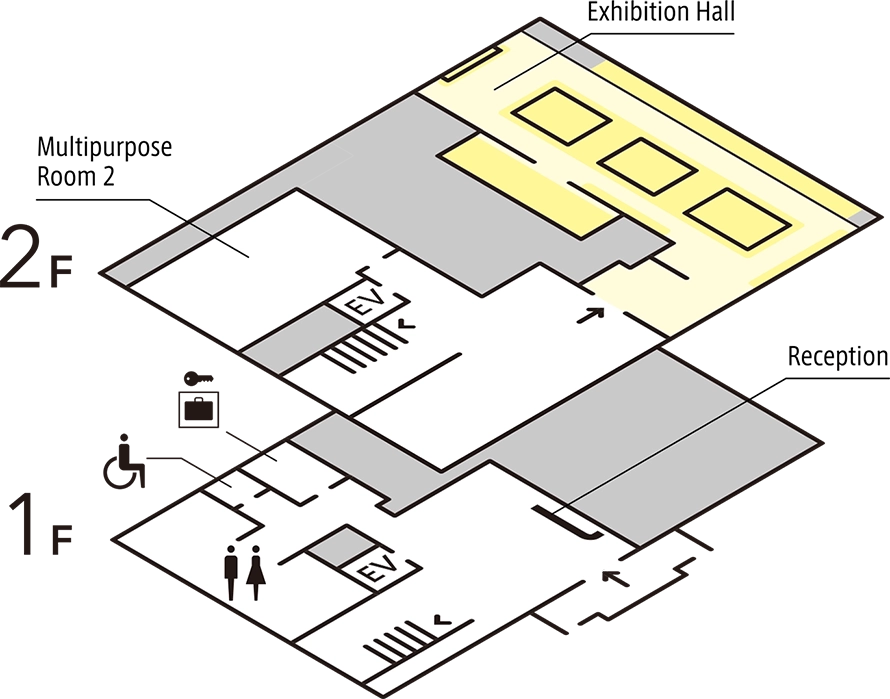
Floor Map

Facilities

Lockers
Lockers are located on the 1st Floor and are free to use.
Restrooms
A men's room, women's room, and accessible restroom are located on the 1st Floor. The women's room also has a changing table in a private stall.
Elevators
Elevators are available in the buildings and are wheelchair accessible.

Access

Address
1015, Nonaka-machi, Kurume-shi,
Fukuoka 839-0862, Japan
Plane
50 min. from Fukuoka Airport by Nishitetsu Highway Bus (Stop:Bunka Center Mae)
Train
20 min. by Shinkansen or 40 min. by rapid train from JR HakataStation to JR Kurume Station 30 min. by limited express or 40 min. by express train from Nishitetsu Fukuoka (Tenjin) Station to Nishitetsu Kurume Station
Bus
15 min. from JR Kurume Station, 5 min. from Nishitetsu Kurume Station (Stop: Bunka Center Mae)
Car
10 min. from Kurume Interchange (Paid parking at Ishibashi Cultural Center) *Approximate times